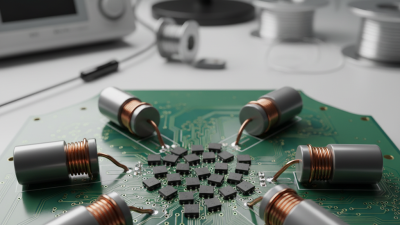
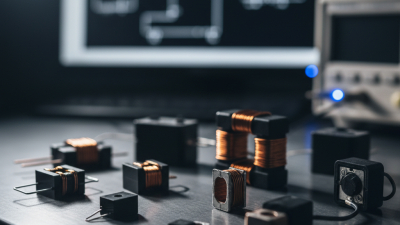
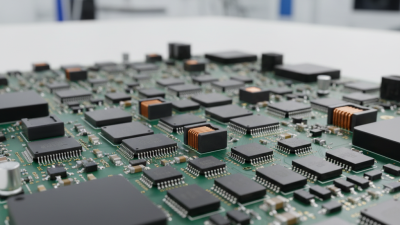
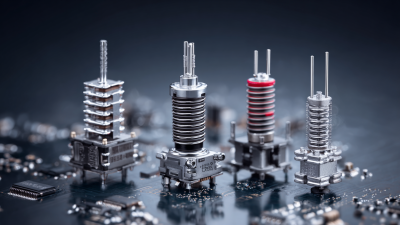
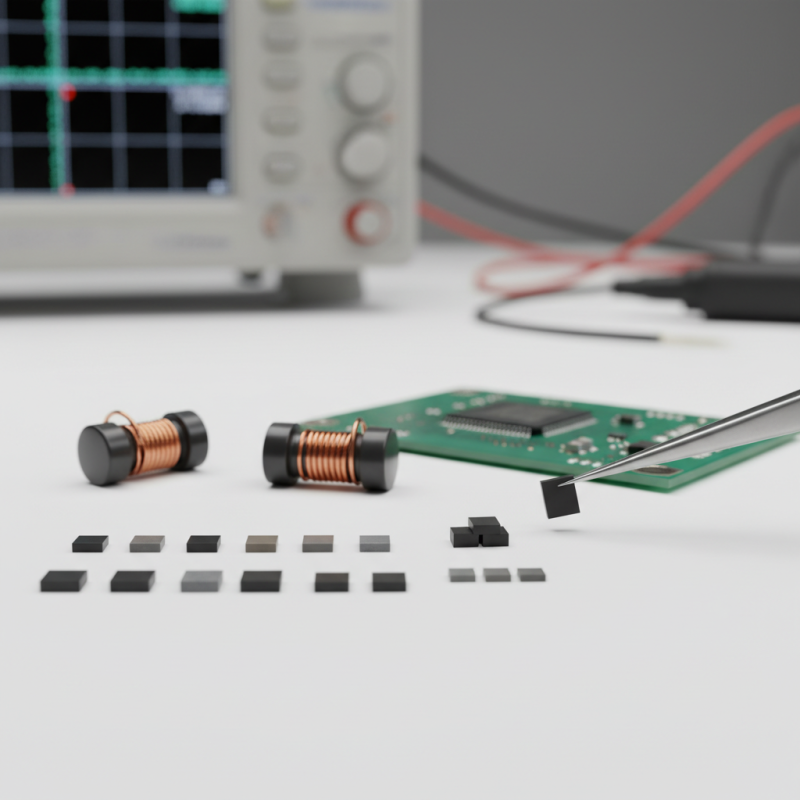
Picking the right Ferrite Chipbead isn’t just a small detail—it can really make a difference in your electronic projects. These tiny components are key to filtering out high-frequency noise, which helps your circuits run smoother and more reliably. When you choose the right Ferrite Chipbead, you're ensuring your signals stay clear and your system remains solid overall.
Brands like Murata and TDK are popular choices—they offer a pretty wide selection. The trick is to find one that matches your device’s specs. Sometimes, you might even need to try out a few different types before you find the perfect one. It can get a bit overwhelming, especially when you’re juggling impedance and current ratings, but trust me, making the right choice really pays off in terms of performance.
Oh, and don’t forget about the Ferrite rod choke inductor—it can be a great addition to your design if you’re aiming to cut down noise even further. Not every project will need both, so think about what your specific setup calls for. Taking a bit of time to consider these options will definitely help you end up with a better, more reliable end product.
Understanding Ferrite Chipbeads: Basics and Importance
Ferrite chipbeads play a crucial role in modern electronics, particularly in noise suppression. These tiny components help mitigate electromagnetic interference (EMI) in circuits, ensuring optimal performance. According to a report by Research and Markets, the global Ferrite Bead market is projected to grow significantly, reaching USD 3 billion by 2026. This underscores their importance in various applications ranging from consumer electronics to automotive.
When selecting a Ferrite Bead, it’s essential to understand their specifications. Key parameters includeimpedance, current rating, and frequency characteristics. Choosing the right Ferrite Bead can enhance device reliability and efficiency while reducing unwanted noise. It's vital to review the manufacturer's data sheets for these specifications. For example, look for beads with high impedance at your application's operating frequency.
Tip:Always evaluate the specific operating conditions of your application. Remember, not all Ferrite Beads are created equal. You may need to test multiple options to find the best fit—consider both performance and cost. A bead that works well in one scenario might not perform as expected in another, so be prepared to adapt your choice.
Another consideration is the size and layout of the PCB. Ferrite Beads come in various sizes, and selecting one that fits well within your design is critical. Misalignment can lead to suboptimal performance. It’s worth examining case studies to learn from challenges others have faced in their designs before making your selection.
Key Factors in Selecting Ferrite Chipbeads for Different Applications
When selecting ferrite chipbeads, understanding your application is crucial. Different environments can demand unique specifications. Consider the frequency range your application operates within. Higher frequencies may require different ferrite materials. Check the impedance characteristics. Impedance impacts performance and filtering capabilities significantly.
Thermal stability is another factor. Chipbeads tolerate heat differently. Ensure the chosen component can withstand your device's operating conditions. Additionally, the size and packaging are essential. A compact design may be necessary for tight spaces. But remember, smaller sizes can often lead to performance trade-offs.
It’s not enough to focus solely on performance metrics. You may find that testing various options yields the best results. Hands-on experiments with Ferrite Inductors can provide insights into real-world behavior. Use simulations as a complementary tool to guide your decisions. This iterative process will enhance your understanding and refine your selection.
2026 How to Choose the Right Ferrite Chipbead for Your Needs? - Key Factors in Selecting Ferrite Chipbeads for Different Applications
| Parameter | Description | Value/Specification | Application |
| Impedance | Resistance to AC signals | 100 Ohm | Power Supply Filtering |
| DC Resistance | Resistance to Direct Current | 0.5 Ohm | Signal Integrity |
| Current Rating | Maximum current the chip can handle | 1 A | Communication Devices |
| Frequency Range | Operational frequency range | 1 MHz - 100 MHz | RF Applications |
| Material Type | Material composition of the chip | Mn-Zn Ferrite | General Purpose |
| Operating Temperature | Temperature range for operation | -40°C to +125°C | Automotive Applications |
Assessing the Electrical Characteristics of Ferrite Chipbeads
When selecting ferrite chip beads, understanding their electrical characteristics is crucial. These components are essential for filtering out high-frequency noise in electronic circuits. They come in various sizes and specifications. The right choice will depend on your application's needs.
Power rating is one of the key factors. Ensure that the Ferrite Bead can handle the maximum current in your circuit. An inadequate power rating might lead to overheating or failure. It's also vital to consider the DC resistance. Lower DC resistance will contribute to better performance in high-frequency applications.
Tip: Always review the manufacturer's datasheets for each part you consider. Examine key parameters like impedance at different frequencies. This insight is invaluable for your design process.
Another important characteristic is permeability. Higher permeability allows the component to filter out more noise. However, this may result in greater losses at low frequencies. Striking a balance is sometimes an ongoing challenge. Testing different beads might be necessary to find what works best. Conduct experiments to see how each component interacts within your particular circuit. This approach can reveal important insights and inform your final decision.
Exploring the Physical Attributes of Ferrite Chipbeads
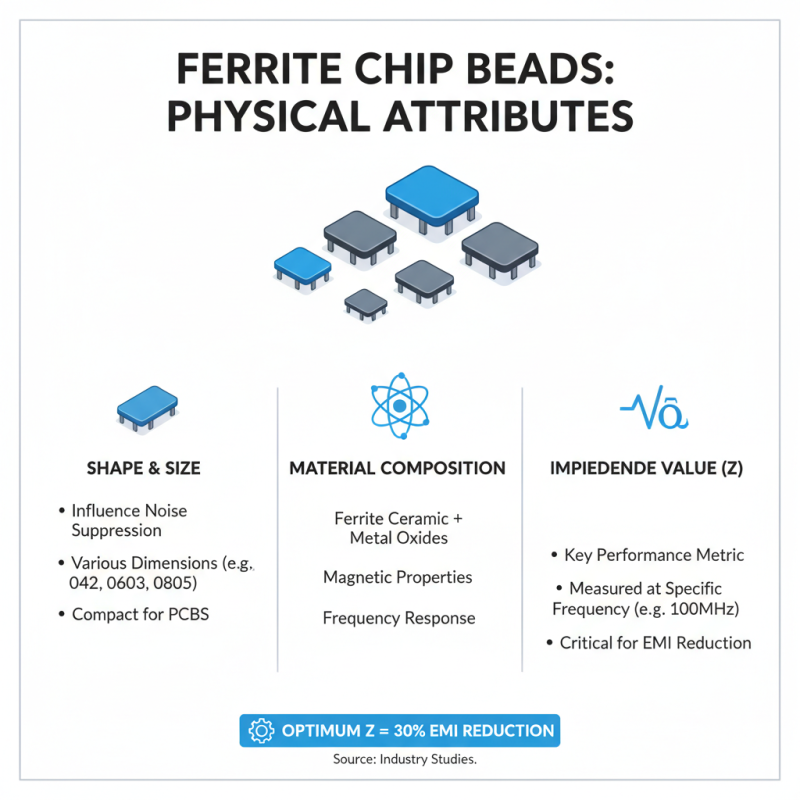
When selecting ferrite chip beads, it is crucial to understand their physical attributes. These components are often used for noise suppression in electronics. Their shape, size, and material composition significantly influence performance metrics in various applications. Notably, the impedance value at a specific frequency is a critical factor to consider. According to industry studies, an optimum impedance range can lead to a 30% reduction in electromagnetic interference in specific circuits.
Size matters for ferrite chip beads. The dimensional standards like 0402 or 0603 are common, but they are not universally applicable. A smaller size may fit better in compact devices, but it might not tolerate higher power. Research indicates that using the wrong size can result in excessive heating. They may not effectively filter noise, leading to potential circuit failures.
Material selection is another vital aspect. Ferrites made from manganese-zinc or nickel-zinc typically are preferred for low-frequency applications. In contrast, more specialized materials serve well at higher frequencies. A technician should evaluate specification sheets carefully to ensure compatibility. Some engineers mistakenly assume all Ferrite Beads perform similarly, which can lead to ineffective solutions.
Common Applications of Ferrite Chipbeads in Electronic Devices
Ferrite chipbeads play a crucial role in electronic devices, helping to filter unwanted noise and enhancing signal integrity. They are commonly used in applications like power supplies, audio equipment, and communication devices. The demand for high-quality ferrite components is ever-increasing as electronics become more sophisticated.
In power supply circuits, ferrite chipbeads reduce high-frequency noise. They act as a filter in lines carrying power to ensure that only the necessary frequencies pass through. Understanding the specific requirements, such as impedance and core material, is key when selecting the right chipbead.
Tip: Pay attention to the current rating and frequency response of the ferrite chipbead. Selecting the wrong type can result in inefficiency. It can also lead to inadequate performance in sensitive applications.
In audio devices, ferrite chipbeads are essential for maintaining sound clarity. They help eliminate hum and interference, which are detrimental to audio quality. The right ferrite components can significantly enhance the overall listening experience without introducing distortion.
Tip: Perform real-world testing with your chosen ferrite chipbead. This can reveal how it behaves under actual conditions, which is crucial for optimal performance. Understanding your environment is vital for an effective application of Ferrite Core Choke.
Guidelines for Sizing and Packaging Ferrite Chipbeads
Choosing the right ferrite chip beadinvolves understanding its size and packaging. Ferrite chipbeads play a critical role in noise suppression in electronic circuits. Their dimensions influence both performance and compatibility with various applications. Selecting an appropriate size ensures that the chip bead can handle the current without overheating. An over-sized Ferrite Bead might reduce efficiency, while an under-sized one could lead to failure in functioning correctly.
When it comes to packaging, you should consider the specific needs of your project. Ferrite chipbeads come in various forms, such as surface mount options for PCB layouts. The type of packaging affects both installation ease and the effectiveness of the Ferrite Bead Filter. Sometimes, choosing a popular package size may not be the best choice for your design, leading to potential challenges during assembly. Reflecting on these choices can save time and resources in the long run.
Ultimately, evaluating the specifications of ferrite chipbeads requires a balance between performance and practicality. It’s essential to analyze datasheets carefully. Understanding the parameters, such as inductance and current rating, is crucial. The more data you gather, the more informed your decision will be. Recognizing that there may be imperfections in select chip designs promotes a critical approach to your choice. This reflection ensures optimized performance of your Ferrite Bead Filter in the intended application.
Evaluating Manufacturer Specifications and Quality Standards
When selecting the right ferrite chip bead, evaluating manufacturer specifications is crucial. Each specification impacts performance. According to a report from a leading electronic components research group, around 30% of failures in electronic devices are linked to inadequate filtering. This makes it essential to choose a component that meets stringent quality standards.
Manufacturers often provide data sheets that detail impedance, DC current rating, and heat resistance. These specifications indicate how well a chip bead will perform under various conditions. A recent industry analysis indicated that beads with higher impedance ratings often reduce electromagnetic interference more effectively. However, many users overlook these ratings, leading to suboptimal choices.
Quality standards differ widely among manufacturers. A compliance certificate can indicate adherence to international standards. However, some manufacturers may provide misleading information. Therefore, it's essential to cross-check specifications with independent testing results. Insights from industry reports suggest that 15% of manufacturers fail to meet claimed specifications. Relying solely on brand reputation without scrutiny can lead to poor performance.
FAQS
: Ferrite chipbeads help filter noise and reduce electromagnetic interference in electronic circuits. They enhance signal integrity.
Specifications like impedance and current rating are crucial. Selecting the right specifications ensures reliability and efficiency.
Yes, the size influences how well the bead handles current. An oversized bead may reduce efficiency; an undersized one may fail.
Analyze datasheets for parameters like inductance and current rating. Reflect on design needs to make informed choices.
Real-world testing is vital to see how the bead performs in actual conditions. This can help improve application effectiveness.
The packaging affects installation ease and effectiveness. Choosing the right package can save time and prevent future challenges.
Yes, not all ferrite chipbeads are the same. Testing multiple options may be necessary to find the best performance.
They help eliminate hum and interference, enhancing sound clarity. Choosing the right bead can improve overall audio quality.
Misalignment can occur if size and layout are not considered. Learning from case studies can help mitigate these issues.
Yes, popular sizes may not fit your design needs. It’s important to reflect and assess the implications of your choices.
Conclusion
The article "2026 How to Choose the Right Ferrite Chipbead for Your Needs?" provides a comprehensive guide on selecting appropriate Ferrite Chipbeads for various electronic applications. It begins by explaining the fundamentals of Ferrite Chipbeads and their significance in noise suppression and signal integrity. Key factors for selection are discussed, including electrical characteristics such as impedance and frequency response, as well as physical attributes like size and packaging.
Further, the article explores common applications, detailing how Ferrite Chipbeads are utilized in devices ranging from smartphones to industrial equipment. It emphasizes the importance of adhering to manufacturer specifications and quality standards when sourcing these components. Overall, this guide serves as a valuable resource for engineers and designers aiming to optimize their electronic designs through the effective use of Ferrite Chipbeads.

 +86-15916242887
 CONTACT US